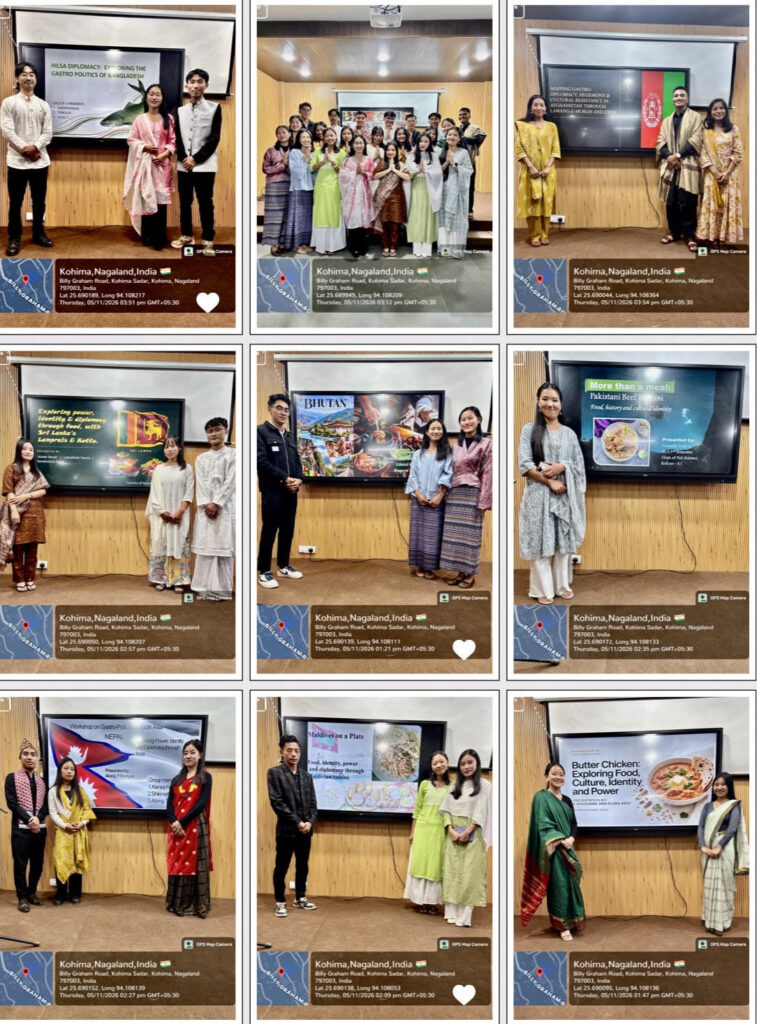
Nov. 5, 2026: The Department of Political Science, Kohima College, organised a workshop on the theme “Gastro-Politics of South Asia” in 2026. The workshop explored the relationship between food, politics, culture, identity, power and diplomacy, highlighting how culinary traditions extend beyond everyday consumption to become expressions of national identity, social relations, historical memory and international engagement.
Drawing on the concept of gastropolitics, particularly Arjun Appadurai’s work on food and social relations in South Asia, the workshop examined how food can reflect and reproduce social hierarchies, communicate cultural values, preserve collective memory and serve as an instrument of diplomacy. It also provided students with an opportunity to examine South Asian countries through their distinctive culinary traditions and understand the political significance of food in different historical and cultural contexts.
The programme was chaired by Dr Toli, while Dr Ketoukhrieü served as the main organiser. In the introductory remarks, the academic purpose of the workshop was highlighted, with emphasis on developing a broader understanding of South Asia through its diverse food cultures and their political significance.
The workshop featured presentations by students on eight South Asian countries, with each group examining selected dishes and their connections to history, culture, identity, power and diplomacy.
1. Afghanistan: Mapping Gastro-Diplomacy, Hegemony, and Cultural Resistance in Afghanistan through Lawang-e-Murgh and Firni
Presented by Ngamyon M, Sanjana Thapa and Lumlang Lating, the presentation explored Afghan culinary traditions through Lawang-e-Murgh and Firni. It examined the influence of geography, history and cultural interactions on Afghan cuisine, while highlighting food as an expression of hospitality, social status and cultural continuity. The discussion also considered how culinary practices preserve cultural identity and provide a form of resistance and continuity amid political instability and conflict.
2. Bangladesh: Hilsa Diplomacy: Exploring the Gastro-politics of Bangladesh
Presented by Sherhunsha Tep, Tangsoi Khiam and Yang T, the presentation focused on Hilsa, or Ilish, as an important symbol of Bangladeshi cultural and national identity. It explored the significance of the fish in everyday life, festivals and collective memory, as well as its role in relations between Bangladesh and India. The discussion highlighted how the sharing and exchange of Hilsa can become a form of cultural diplomacy, illustrating the connections between food, heritage and international relations.
3. Bhutan: A Case Study on Gastro-politics of Bhutan
Presented by Likivi Kive, Medozenuo Kengurüsie and Kapew John, the presentation examined Bhutanese cuisine through the country’s geographical, cultural and social contexts. Dishes such as Ema Datshi and Phaksha Paa illustrated the relationship between food habits, local agricultural practices, national identity and hospitality. The presentation also considered the connections between traditional cuisine, tourism and Bhutan’s broader cultural representation.
4. India: Butter Chicken: Exploring Food, Culture, Identity and Power
Presented by Flora Kent and S Shoiching, the presentation examined Butter Chicken as a dish associated with Punjabi culinary traditions and the historical experiences of Partition and migration. It explored the dish’s origins, its association with the Moti Mahal tradition and the debates surrounding its invention. The discussion also considered how food reflects class relations, migration, diaspora identity and the commercialisation of national cuisine. Butter Chicken was used to illustrate how certain dishes become internationally recognised representations of a country’s cultural identity, while other regional food traditions receive comparatively less visibility.
5. Maldives: Food, Identity, Power and Diplomacy through Maldivian Cuisine
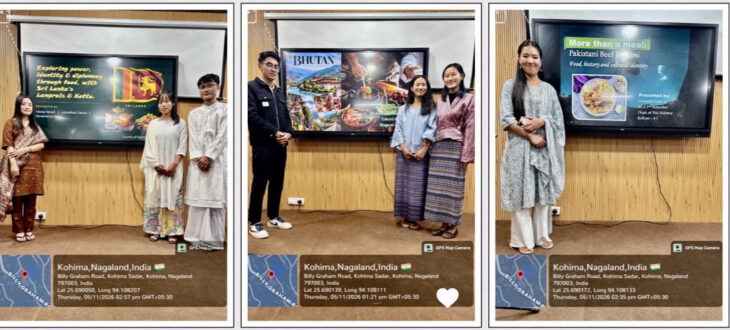
Presented by Leamngam Y Konyak, Shahkum Phom and Pfita Pfinu, the presentation explored the relationship between Maldivian cuisine, maritime geography and national identity. Through traditional food practices, including Mas Huni, it highlighted the importance of tuna and other marine resources in the country’s culinary culture and economy. The presentation also examined the influence of Indian Ocean trade networks, tourism and regional cooperation on Maldivian food culture, demonstrating how cuisine can contribute to cultural representation and diplomacy.
6. Nepal: Beyond the Plate: Exploring Power, Identity and Diplomacy through Nepali Cuisine
Presented by Shikmeth, Keneiphre-ü Yaotsu and Along T Konyak, the presentation explored Nepali cuisine through dishes such as Dal Bhat and Momo. It highlighted the significance of food in everyday life, hospitality and national identity, while examining the regional diversity and cultural influences that shape Nepali culinary traditions. The discussion also considered how traditional dishes preserve cultural connections among migrant communities and contribute to Nepal’s representation beyond its borders.
7. Pakistan: More than a Meal: Pakistani Beef Biryani: Food, History and Cultural Identity
Presented by Verizolü Tetse-o, the presentation focused on Pakistani Beef Biryani and its significance in the country’s food culture. It explored how culinary traditions are shaped by historical influences, migration, regional identities and shared cultural experiences. The presentation highlighted the role of food in preserving collective memory, expressing belonging and communicating cultural identity across generations.
8. Sri Lanka: Exploring Power, Identity and Diplomacy through Food with Sri Lanka’s Lamprais and Kottu
Presented by Lutsukholu Swuro, Keneivonuo Seyie and Veluta Venuh, the presentation examined Lamprais and Kottu as distinctive expressions of Sri Lanka’s culinary and cultural history. It explored the multicultural influences reflected in Lamprais, including its Dutch Burgher heritage, and the significance of Kottu as a popular street food. The discussion also considered how food connects public spaces, livelihoods, social interactions and cultural identity, while highlighting the challenges of preserving culinary traditions amid commercialisation and social change.
Key Discussions and Emerging Themes
Across the presentations, several important themes emerged. Food was examined not merely as a cultural practice but also as a political and social phenomenon.
The presentations demonstrated how particular dishes become symbols of national identity and collective belonging. They also highlighted the influence of migration, colonial encounters, trade and historical developments in shaping regional cuisines.
Another important theme was food diplomacy. The discussions illustrated how culinary traditions can facilitate cultural exchange, strengthen people-to-people connections and contribute to a country’s international image. At the same time, the presentations drew attention to questions of power and representation, including how certain cuisines and dishes gain international recognition while others remain less visible.
The workshop further explored the relationship between food and social hierarchies, particularly how culinary practices can reflect differences in class, status, access to resources and economic power. Discussions on tourism, commercialisation and cultural preservation also highlighted the changing role of traditional cuisine in contemporary South Asian societies.
The workshop concluded with remarks by Dr Konei Nakhro, who aptly summed up the central idea of the programme with the statement, “Politics can be served on a plate”.
The workshop provided an engaging interdisciplinary platform for students to connect political concepts with everyday cultural practices. By examining the culinary traditions of eight South Asian countries, the presentations demonstrated that food is closely intertwined with history, identity, power, diplomacy and social relations.
The programme encouraged students to look beyond the ingredients and preparation of familiar dishes and recognise the wider political, historical and cultural narratives embedded in them. It also offered an opportunity to appreciate the richness and diversity of South Asian food cultures from a political perspective.
Through its interactive and comparative approach, the workshop made an important contribution to understanding South Asia, demonstrating that food can be both a marker of cultural identity and a meaningful lens through which to study politics and international relations.
The workshop with a diverse display of food prepared by students from the countries assigned. Altogether, this was a successful programme.